Introduction
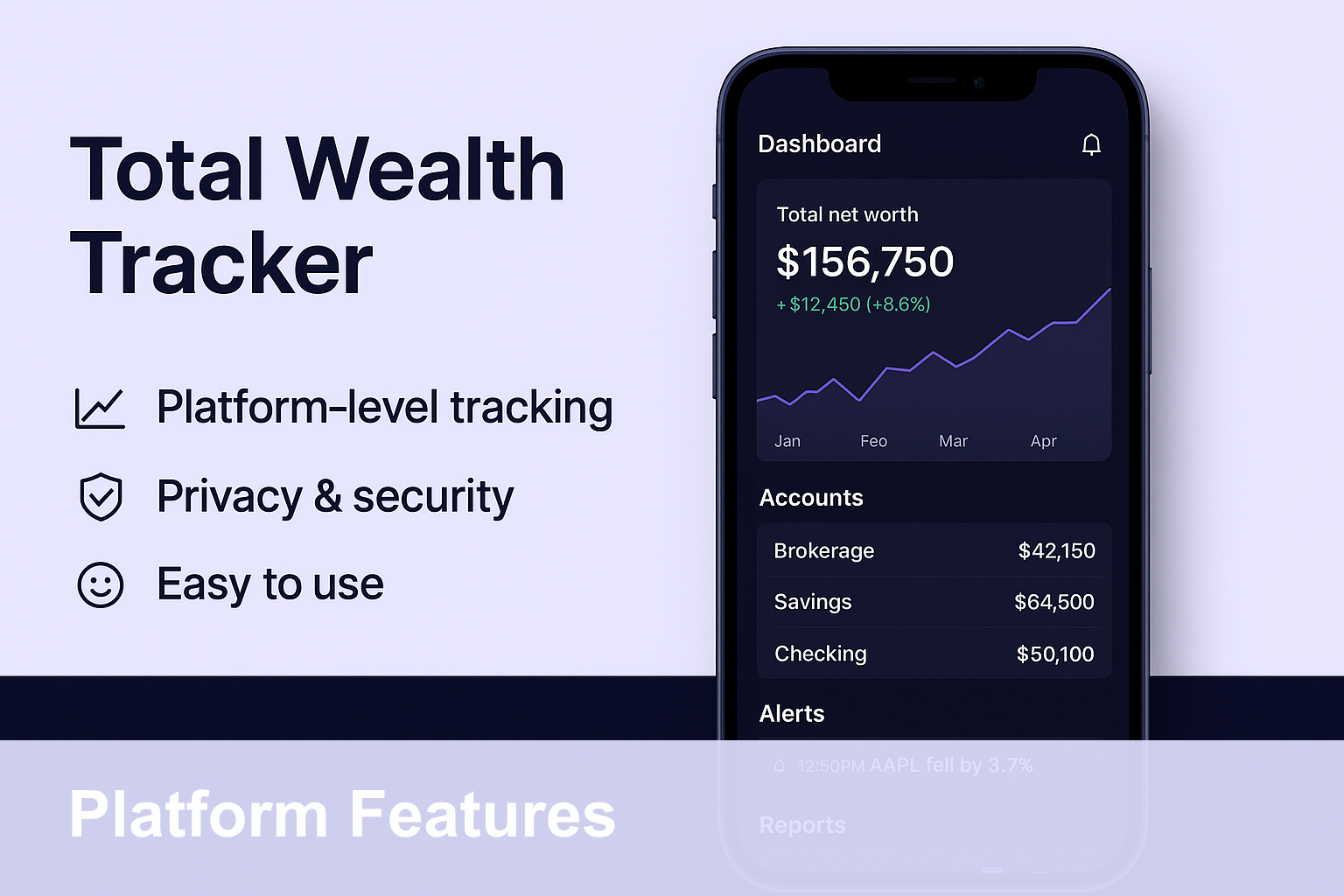
Many investors do not need a second trading terminal. They need a reliable way to remember where their money is and how those accounts add up. Platform-level tracking solves that by treating each broker, account or asset bucket as one portfolio line.
How platform-level tracking works
Instead of importing every position, enter the platform name, asset type, invested value, current value, currency and date. Update the account total whenever you review it.
Benefits
- One combined view: Bring brokers, crypto, P2P, funds, cash and other accounts together.
- Less maintenance: Avoid reproducing every transaction or security.
- Broad compatibility: Track platforms even when there is no supported integration.
- No broker credentials: Manual tracking does not require brokerage login details.
What it does not mean
Total Wealth Tracker does not use broker APIs to aggregate holdings, does not send customizable market alerts and does not generate detailed investment reports. Optional cloud sync only synchronizes data that has been entered into the tracker.
Frequently Asked Questions
How does Total Wealth Tracker connect to investment platforms?
It does not connect to them for the core tracking workflow. Users enter platform values manually.
Can I customize market alerts?
No. Market and portfolio alerts are not currently supported.
Can I add a platform that is not in a predefined list?
Yes. Platform names are entered by the user, and custom asset types can also be created.
Conclusion
Platform-level tracking is a practical middle ground between a spreadsheet and a full brokerage aggregation system. See the multi-broker portfolio tracker page for a visual example.
